![Kara Connect - Logo A - RGB - White.png]](https://support.karaconnect.com/hs-fs/hubfs/Kara%20Connect%20-%20Logo%20A%20-%20RGB%20-%20White.png?height=40&name=Kara%20Connect%20-%20Logo%20A%20-%20RGB%20-%20White.png)
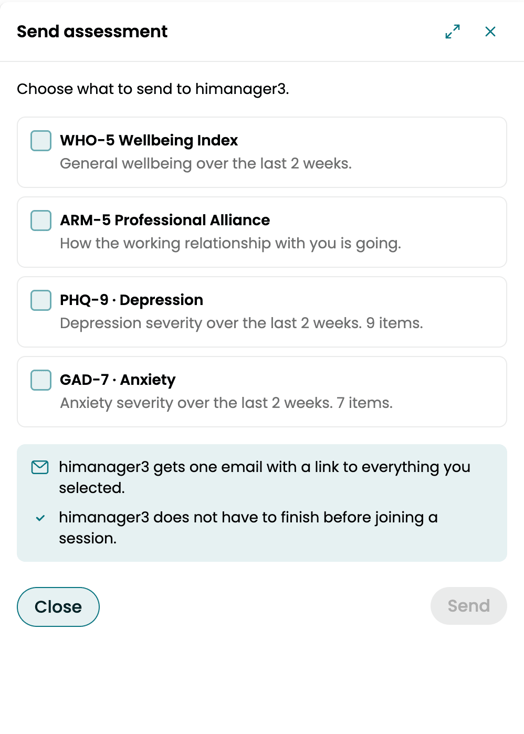
PHQ-9 and GAD-7 are now available in the Assessments Library. You can use them with your own clients to screen for and track depression and anxiety symptoms over time. You decide when they're useful, and the results stay between you and your client.
Key points:
- What's new: two widely used clinical measures, PHQ-9 for depression symptoms and GAD-7 for anxiety symptoms, both covering the past two weeks.
- Your call: neither is mandatory. Use them when a clinical measure fits the client and the work, and skip them when it doesn't. Physio, coaching, financial and legal support may never need them.
- Confidential by design: scores are visible only to you and your client. They are not shared with employers, individually or in aggregate, and they don't appear in HR manager reports.
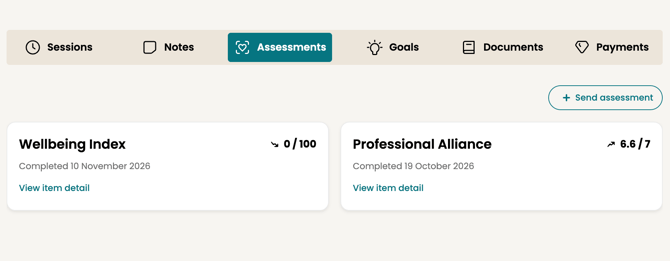
- Separate from platform measures: WHO-5 and ARM-5 remain the anonymised, aggregated measures reported to customers. PHQ-9 and GAD-7 are treatment tools, not reporting tools.
What they measure
PHQ-9 is a nine-item questionnaire that screens for depression and measures symptom severity over the past two weeks. Its items map to the diagnostic criteria for major depressive disorder, covering areas like mood, interest, sleep, energy, appetite, concentration and self-worth.
GAD-7 is a seven-item questionnaire that screens for generalised anxiety and measures how often clients have been bothered by symptoms such as worry, restlessness and irritability over the past two weeks.